
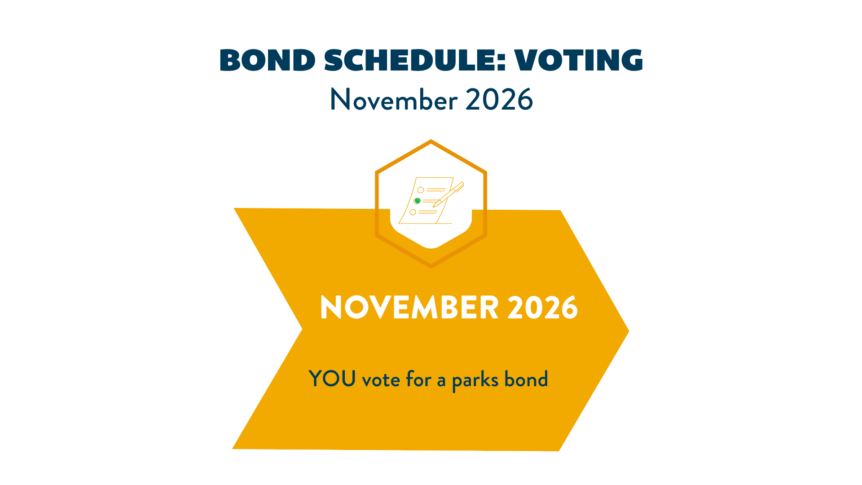
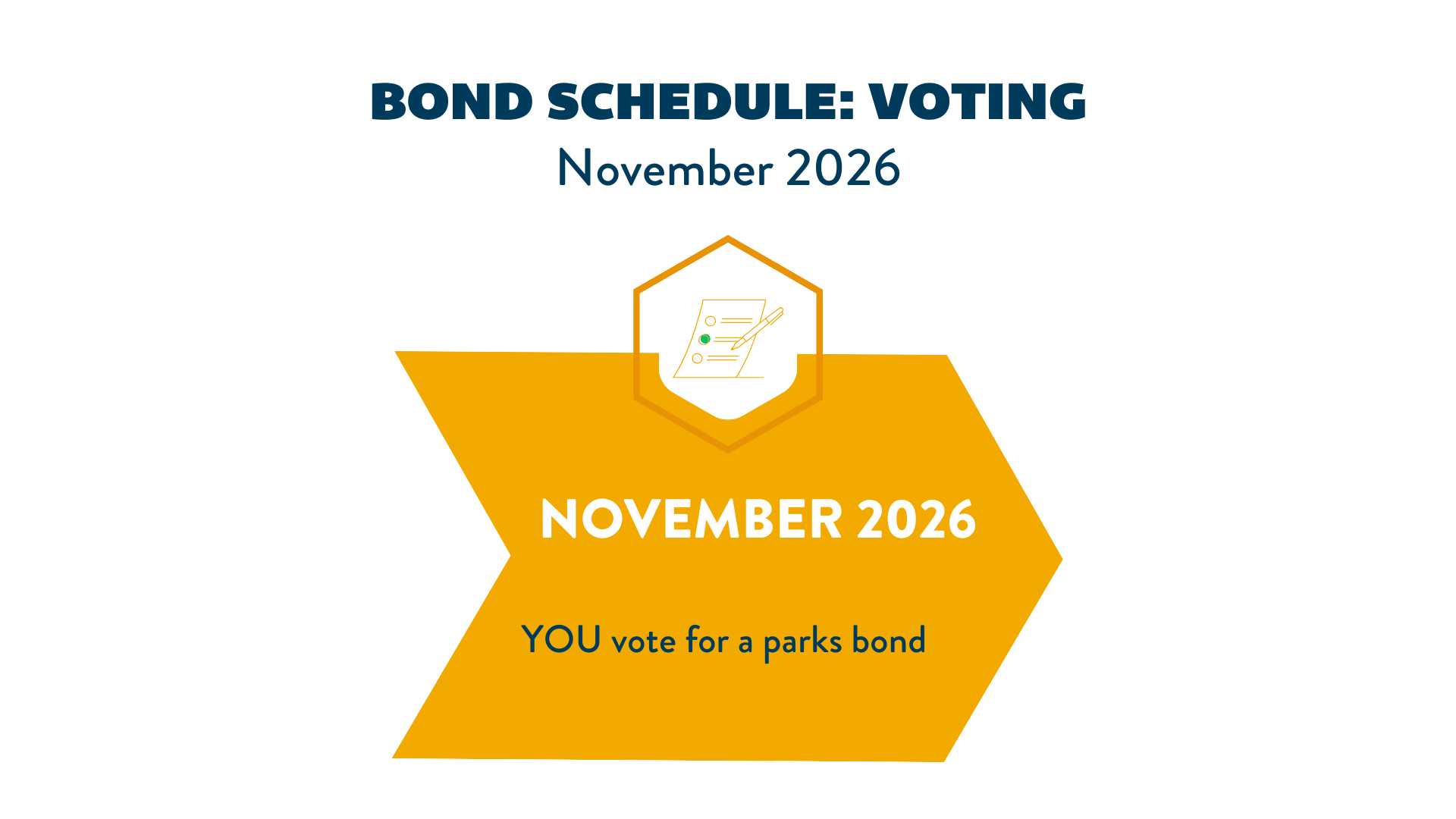
The City of Austin is most likely holding a General Obligation Bond Election in November of 2026. The last bond election that the city had was in 2022, and the last bond election that included parks was in 2018. Usually, Austin Parks and Recreation Department relies on bond elections every six years, but it will have been eight years between them by the time we get to November 2026. We wanted to take some time to explain what a bond is, why we’re advocating for a bond election now and why we need a bond for our parks in this blog.
What is a General Obligation Bond?
Bonds are used by cities to finance projects that will benefit the community for decades, allowing for the full cost of the project to be spread out over time, creating intergenerational equity. General Obligation Bonds (GO) are what we are focusing on here, and they are backed by “the full faith and credit of the city” and property taxes. Think of it like a mortgage or a loan to fund something now, but pay off over time. GO Bonds have to be passed by the voters to show that there is community support for the programs.
GO Bonds are primarily used for capital projects. For example, some of the projects that received funds through the 2018 parks bond were Colony Pool, Givens Pool, Shipe Pool, Montopolis Pool, Beverly S. Sheffield Pool and Parque Zaragoza Bath House renovations. Greenbelt improvements were completed at Little Walnut Creek, Upper Bull Creek, Blunn Creek and others. Park improvements funded through the 2018 bond can be found at Holly Shores at Town Lake Metro Park, Trevino Metro Park, Givens District Park, Colony District Park, Rosewood Neighborhood Park, Georgian Acres Neighborhood Park, Duncan Neighborhood Park, Brownie Neighborhood Park, Highland Neighborhood Park, Oertli Neighborhood Park, Mountain View Neighborhood Park, Rialto Neighborhood Park, Metz Neighborhood Park, Brush Square and Pharr Tennis Center.
GO Bonds cannot fund operations, maintenance or employee salaries. This is critical to understand because as park improvements are made and as new park facilities are developed to meet the needs of the City and Park’s Department long-range plans, the need for maintenance and operations funding has to be obtained through the yearly budgeting process, not through bonds.
City Council will vote by August 2026 to put a General Obligation Bond Election on the Ballot in November 2026.
How’d we get here?
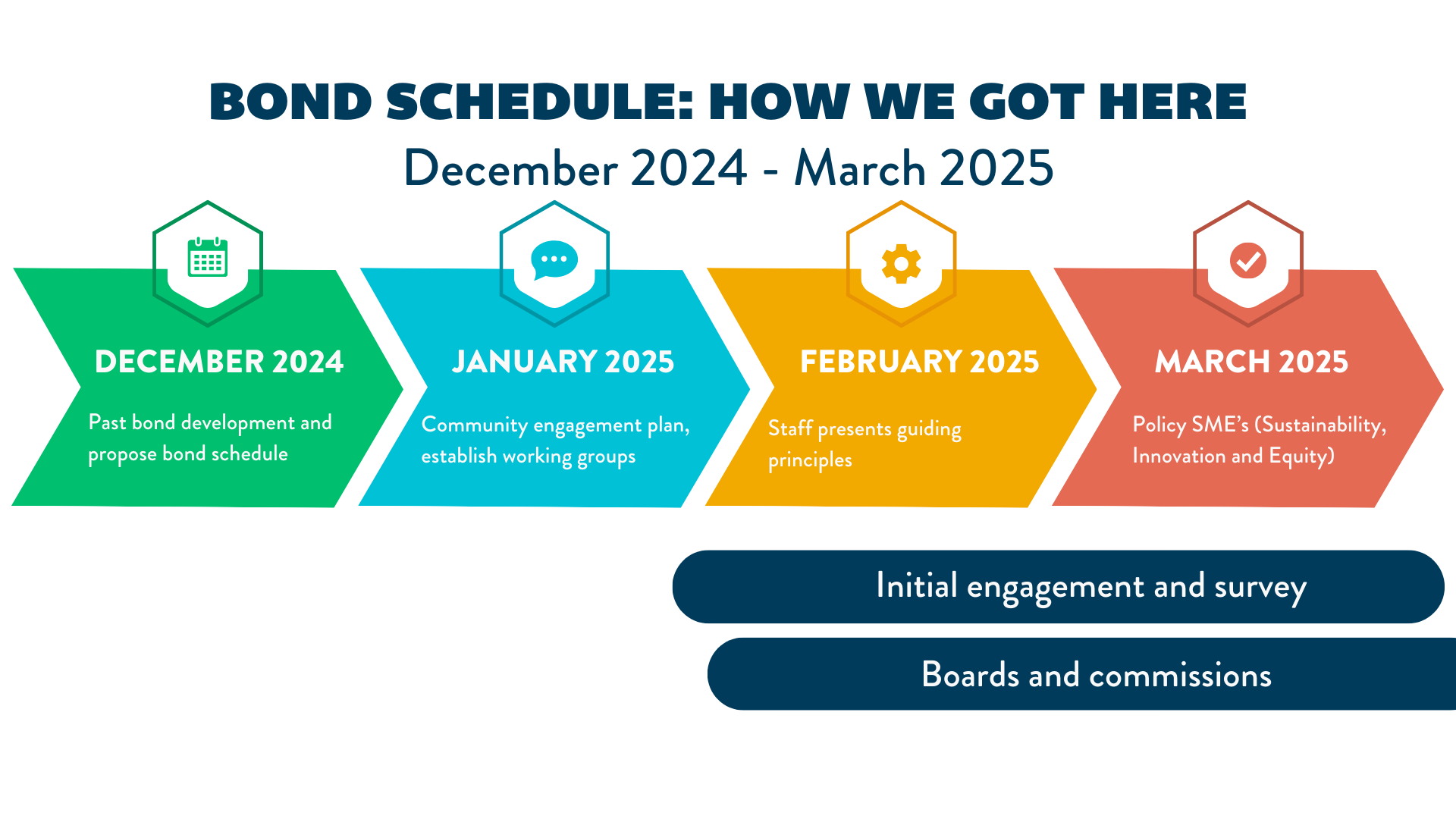
In February 2024, City Council passed Resolution 20240215-025, which directed the City Manager and the Joint Sustainability Committee to develop recommendations for an Environmental Investment Plan to address critical needs for our city related to climate, resilience and sustainability. They were also directed to provide possible funding options to achieve the city’s environmental goals, including possible bond funding. It was determined that a 2024 bond wouldn’t be sufficiently vetted and planned, but there was hope for a 2025 bond that would include parks.
On July 18, 2024, City Council adopted Resolution 20240718-093, which directed the City Manager to bring two items to City Council:
1) A comprehensive bond package that funds and addresses climate, infrastructure, and any other public improvements for the purpose of conducting an election no later than November 2026, and
2) A comprehensive climate implementation program of which one component is a climate bond proposition contained in the comprehensive bond package.
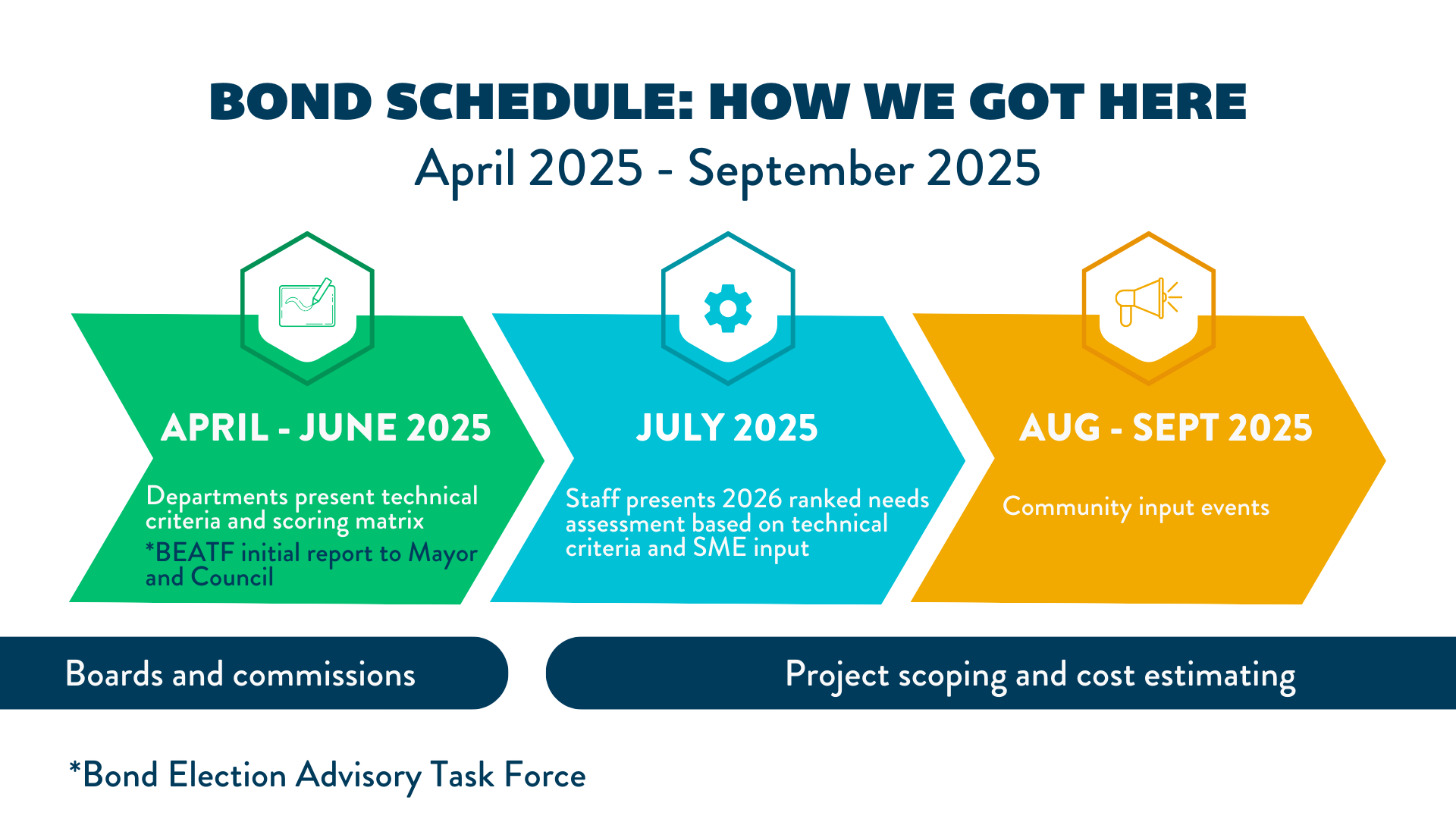
On August 29, 2024, City Council approved Resolution 20240829-138, which established the Bond Election Advisory Task Force (BEATF). A Bond Election Advisory Task Force is established to identify and prioritize bond funding for projects that will address infrastructure needs including climate investment opportunities necessary to implement a comprehensive climate implementation program. The Task Force is composed of 22 members: two appointees by each Council Office. The BEATF recommended a 2026 Bond Election. City staff developed an Infrastructure Needs Inventory list. Once the City’s Needs Inventory is ranked and prioritized, a recommended list of capital projects is vetted through the Bond Election Advisory Task Force before finalizing and presenting to City Council.
Where we’re at…
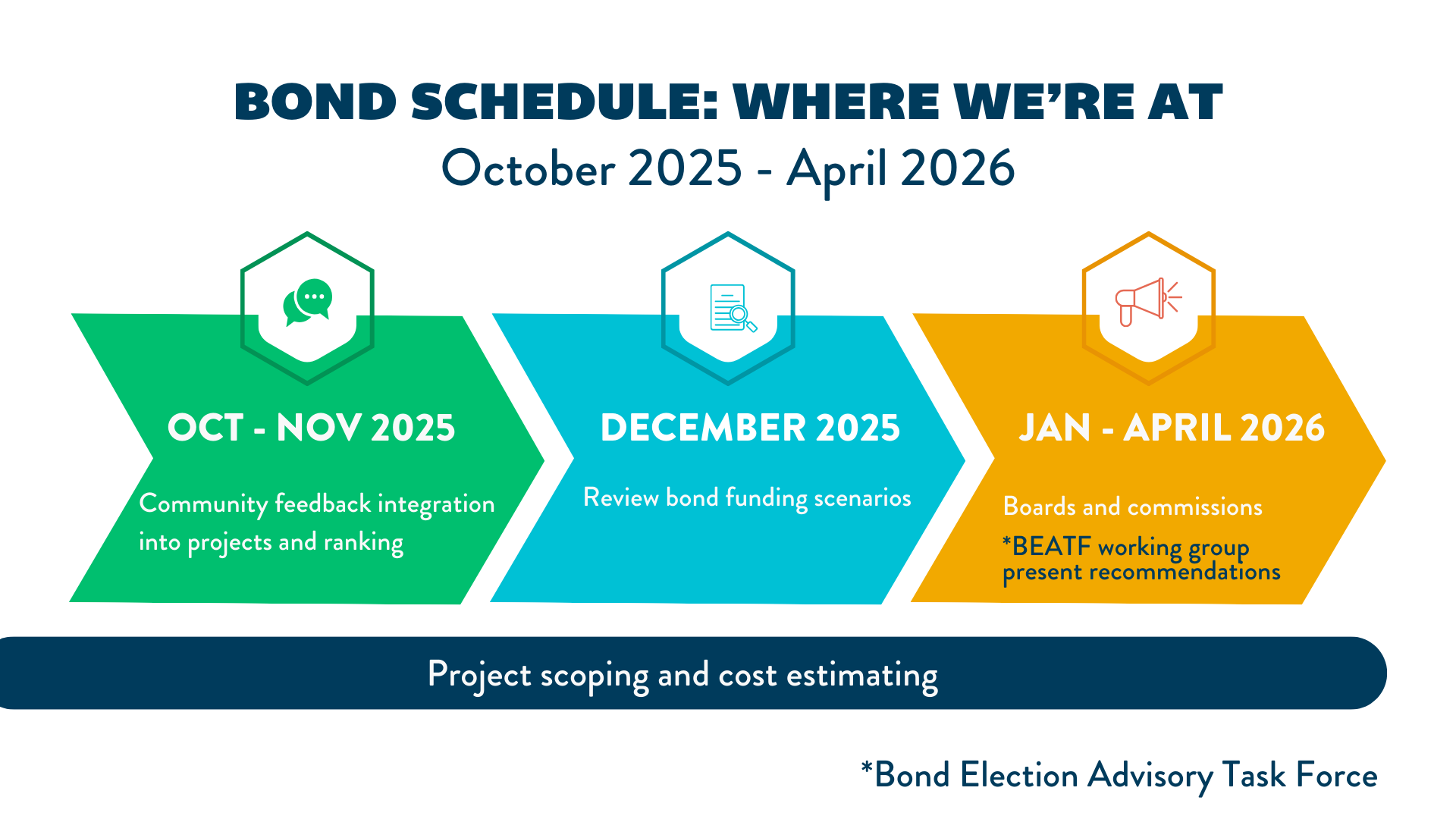
Historically, the Parks Department has been on a six year bond cycle. By 2026, it will be eight years since the last bond that went to our parks. The parks department has used bond funds in the past for some of the best amenities in the city.
We recognize there are way more needs in the city than there is available funding, and parks are a crucial need that encompass many of the Guiding Principles for a bond program. Capital Delivery Services (the City department that manages the Capital Improvement Program) created the guiding principles of Equity, Affordability, Innovation, Sustainability & Resiliency, Proactive Prevention, and Community Trust & Relationship to help BEATF identify projects to support. Those guiding principles all show up in our parks. The parks department has over $1.8B in needs, but a robust parks bond needs to be $200-300M to be impactful.
What’s next?
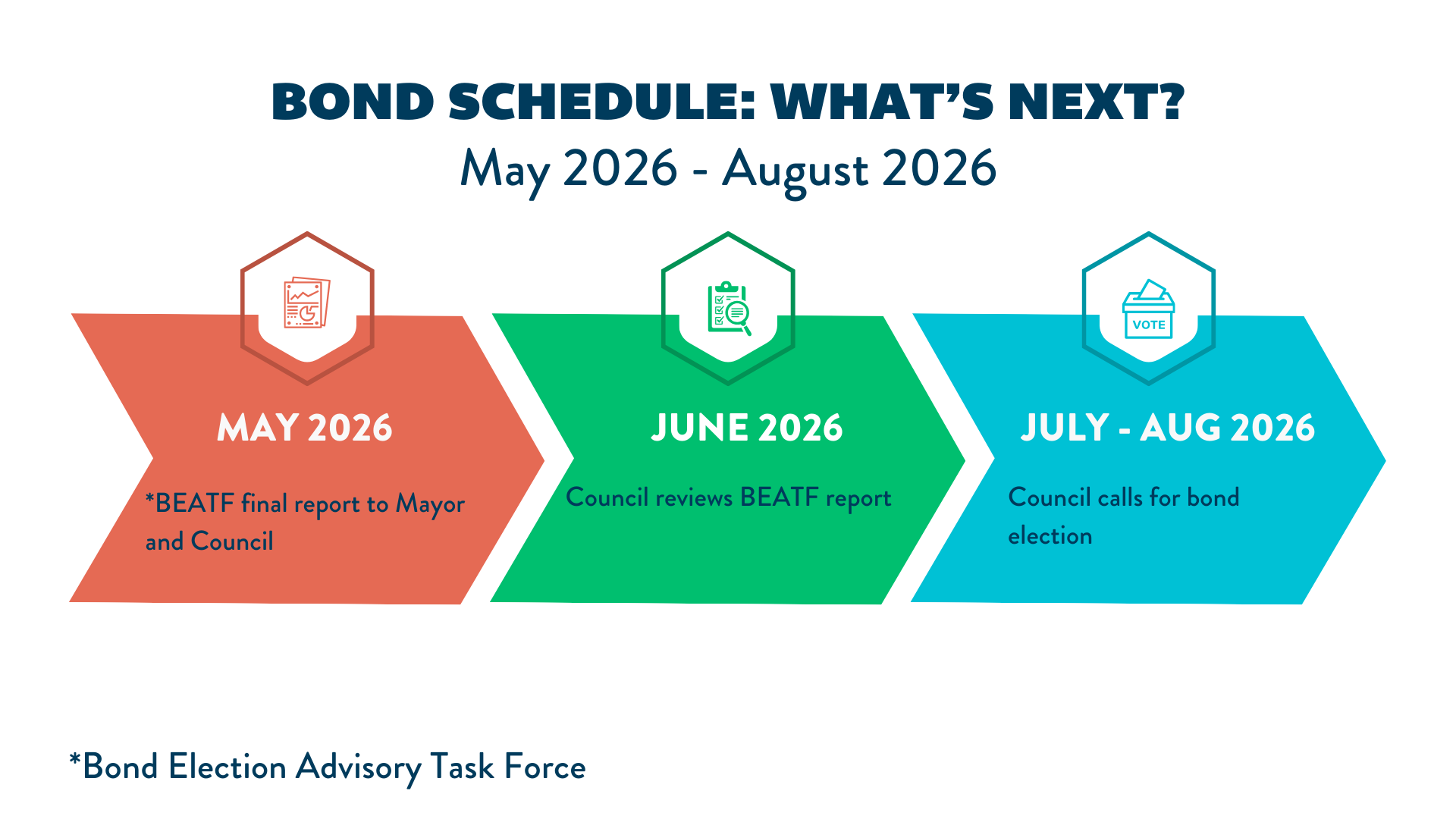
There will be multiple ways that you can advocate for a strong parks bond throughout the process. We will be updating this blog throughout the bond process and will be sending out action alerts for critical times when your voice is needed.
To stay up to date on all things park advocacy, sign up for our newsletter. Be sure to select “interested in park advocacy” when signing up!